

Cables lying on the seafloor bring the internet to the world. They transmit 99 percent of international data, make transoceanic communication possible in an instant, and serve as a loose proxy for the international trade that connects advanced economies.
Their importance and proliferation inspired Telegeography to make this vintage-inspired map of the cables that connect the internet. It depicts the 299 cables that are active, under construction, or will be funded by the end of this year.
In addition to seeing the cables, you'll find information about "latency" at the bottom of the map (how long it takes for information to transmit) and "lit capacity" in the corners (which shows how much traffic a system can send, usually measured in terabytes). You can browse a full zoomable version here.
The cables are so widely used, as opposed to satellite transmission, because they're so reliable and fast: with high speeds and backup routes available, they rarely fail. And that means they've become a key part of the global economy and the way the world connects.
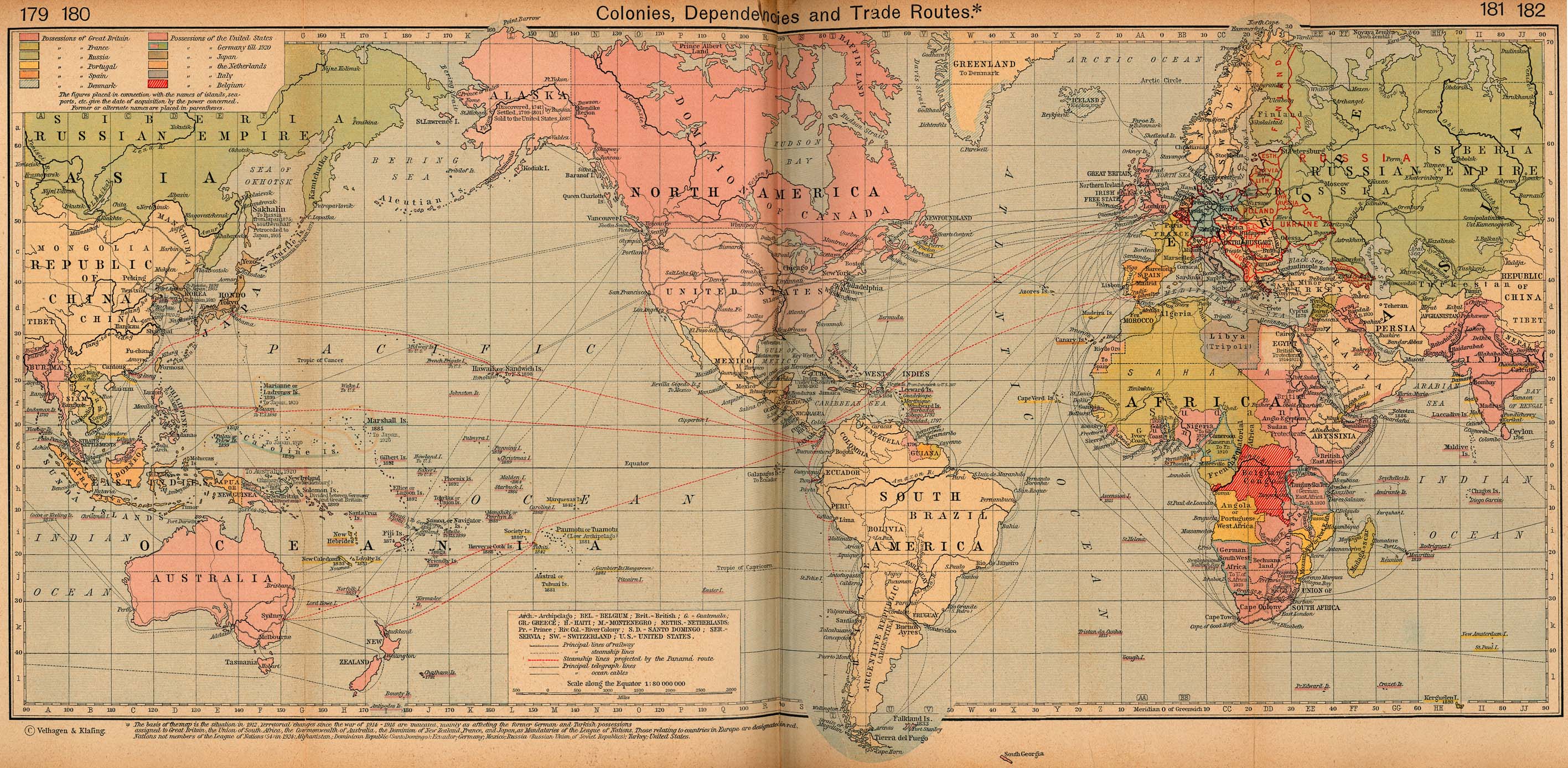
Take, for example, the below map, which lets you slide between a 1912 map of trade routes and Telegeography's map of submarine cables today. The economic interdependence has remained, but the methods and meaning have changed:
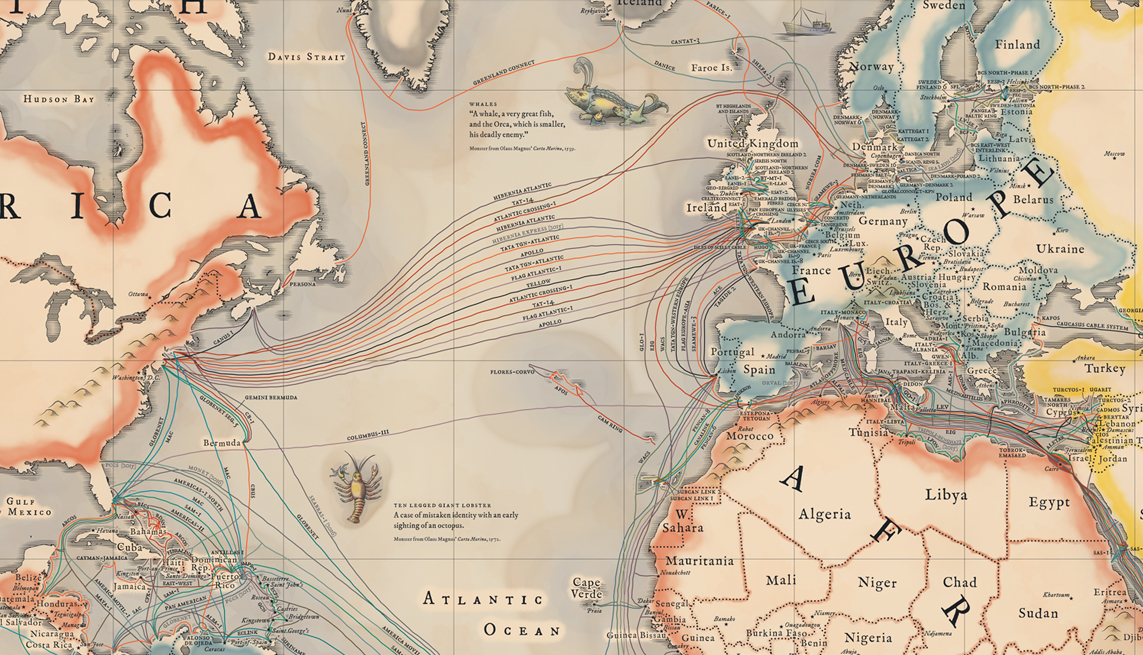
The submarine cable map shows economic connections in less-developed countries as well. Cablesbetween South America and Africa, for example, are much more scarce than trans-Atlantic and trans-Pacific routes:
/cdn0.vox-cdn.com/uploads/chorus_asset/file/3498666/africaandsouthamerica.0.jpg)
Connections in the South Atlantic are scarce. (Telegeography)
The submarine cable map shows economic connections in less-developed countries as well. Cablesbetween South America and Africa, for example, are much more scarce than trans-Atlantic and trans-Pacific routes:
Connections in the South Atlantic are scarce. (Telegeography)
Though cables to developing countries are expanding, they have a lot of work to do before they catch up. And Antarctica is left out completely (scientists down there get their internet from satellites).
The analogy between submarine cables and historic trade routes has a lot of caveats: trade routes were determined by geography as well as economic interests, and economic incentives were a lot different then than they are today. It would also be a mistake to overlook physical goods in favor of the internet (just look at those giant container ships). But both then and now, paths across the ocean require investment, trading partners on both sides, and a willingness to take risks. Sailors took the gamble in the past, and tech companies are taking it now.
Post a Comment
Your comment is highly welcome
Now it's easier to drop your comments
Just write your name and write your comment then Publish...!!!